
Blog
How to Pick the Right AI Tool for Your Business

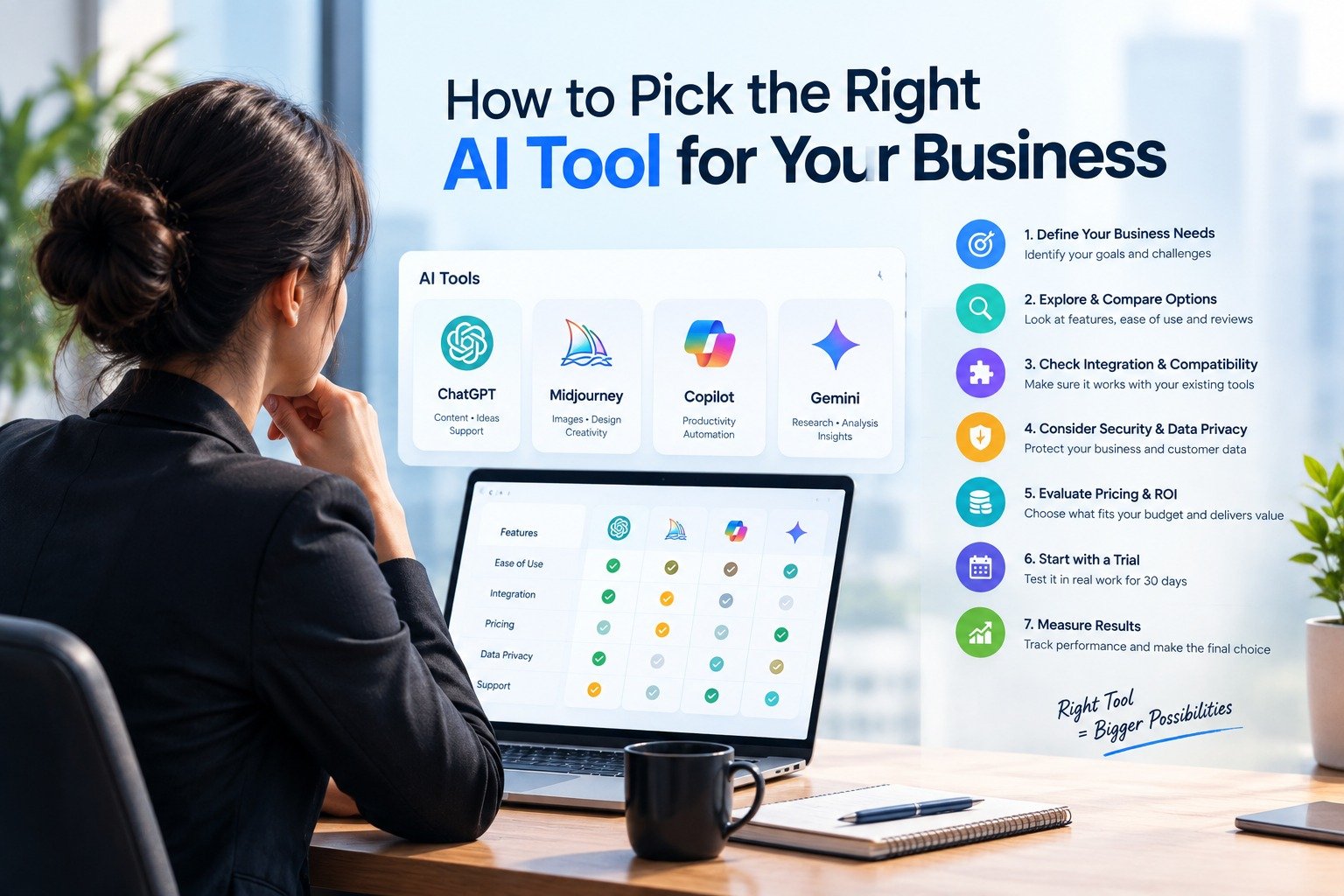
Start with the task, not the tool. Find the job your team does most often and likes least, then look for software that does that one job well. Test it for 30 days with one team. Keep it only if someone complains when you take it away.
Step 1: Write down the problem before you look at anything
Most bad AI purchases start the same way. Somebody sees a demo, gets excited, and then goes looking for a use for it.
Flip that around. Before opening a single product page, write one sentence describing the problem. It has to be specific enough to measure.
“We want to use AI” is not a problem. “Our support team takes nine hours to reply to a first message and customers complain about it” is a problem. The second one tells you what to buy and how you will know if it worked.
If you cannot write that sentence, you are not ready to buy anything yet, and that is fine. Spend a week watching where the time goes instead.
Step 2: Check if you already own the answer
This step saves more money than any other and almost nobody does it.
A lot of the software your company already pays for has added AI features. Your CRM, your helpdesk, your office suite, your project tool. Some of it is genuinely good. All of it is already paid for and already holds your data.
Before buying anything new, ask whoever manages your existing tools what AI features are already switched off. You may find you are about to pay twice.
Step 3: Judge the tool by the boring things
Demos are designed to look good. Here is what to look at instead.
Does it connect to what you already use? A tool that cannot talk to your existing systems will create manual copying work, which cancels out the saving.
Can a normal person use it? If it needs training sessions and a champion, adoption will fade within two months.
Where does your data go? Ask directly whether your data is used to train models, where it is stored, and how you get it back if you leave.
Who owns it? Small startups are often better products. They are also more likely to disappear or triple their price. Know which risk you are taking.
What does it cost per person per month, all in? Include the plan, the add ons, and the time someone spends maintaining it.
Step 4: Run a real 30 day test
Not a demo. Not a sandbox. Real work, real data, real people.
Pick one team. Pick two or three tasks. Set a start date and an end date. Before you begin, write down two numbers you will compare afterwards: how long the task currently takes, and how often it currently goes wrong.
During the test, ask people to keep a very short note of anything that broke, confused them, or needed redoing. Those notes are worth more than the vendor’s case studies.
Step 5: Decide with evidence, not enthusiasm
At the end of 30 days, one of three things is true.
The team is using it without being reminded. Buy it.
The team used it at first and then drifted back to the old way. Do not buy it, and find out what the friction was, because the next tool will have the same problem.
The team used it but nothing measurable changed. This is the trap. Something can feel better and save nothing. Be honest here.
Step 6: Keep it under control
Once you buy one tool, three more will appear. That is normal. What is not normal is having eleven AI subscriptions across a 40 person company and no idea what they all do.
Keep a simple list. Tool, owner, cost, what it does, renewal date. Review it twice a year and cancel what nobody defends.
Set a basic rule for what data is allowed into which tools. It does not need to be a 20 page policy. One page that people actually read beats a long one that nobody opens.
Step 7: Plan for the tool getting worse
AI tools change under you. A model gets updated, output quality shifts, features get moved behind a higher price tier.
So do not build something critical on a tool you cannot replace. Ask whether you could export your data and switch within a month if you had to. If the answer is no, weigh that against the benefit before you go deeper.
Questions to ask every vendor
- Is our data used to train your models, and can we opt out?
- Where is our data stored, and under which country’s rules?
- What happens to our data if we cancel?
- Can we export everything we put in, in a usable format?
- What is your uptime record over the last year?
- Who do we contact when it breaks, and how fast do you respond?
- What is the real cost at our size, including everything?
If a vendor is slow or vague on the first three, that is your answer.
Mistakes that waste the most money
Buying a platform when you needed a feature. Big suites promise everything and get used for one thing.
Rolling out to everyone at once. It creates noise, confusion, and a lot of people who now associate AI with a bad experience.
Letting the loudest person pick. Enthusiasm is not evidence.
Ignoring the maintenance person. Every automation ends up owned by someone. Find out who before they leave the company.
Signing an annual deal to save 20 percent on a tool you have used for three weeks. The discount is not worth the lock in at that stage.
Frequently asked questions
How do I choose an AI tool for my business?
Start with a specific problem you can measure, check whether your existing software already solves it, shortlist two or three options, then run a 30 day test with one team on real work before committing.
How much should a small business spend on AI tools?
Begin with one paid seat for whoever has the heaviest repetitive workload. Grow the spend from a proven result rather than setting a budget first and then looking for ways to use it.
Should I buy one big AI platform or several small tools?
Several focused tools usually work better at first, because they solve nameable problems and are easy to cancel. Platforms make more sense once you know exactly which jobs you need covered.
How long should an AI tool trial last?
Thirty days of real work is usually enough. Shorter than that and you only see the honeymoon period. Much longer and the test never ends and a decision never gets made.
What is the biggest mistake companies make with AI tools?
Buying before defining the problem. Almost every failed rollout traces back to a tool that was purchased because it looked impressive, not because someone needed it.