

Blog
What Is Post-Quantum Cryptography, and Why It Matters Sooner Than You Think

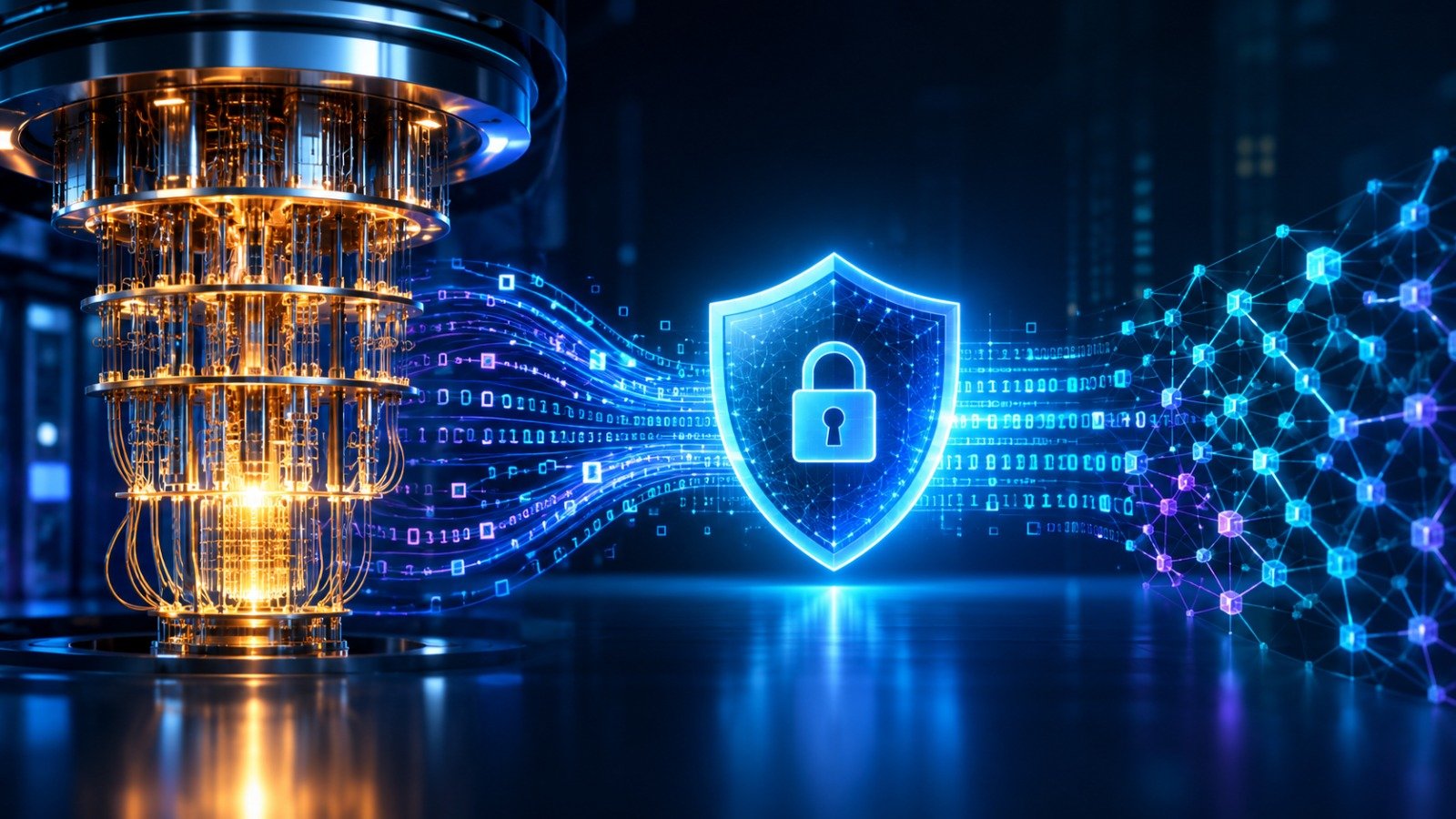
Post-quantum cryptography is a new set of encryption methods designed to stay secure even against a quantum computer. It matters now, before such a machine exists, because attackers are already copying encrypted data and storing it to open later.
How today’s encryption works
Almost everything private on the internet is protected by a simple trick. The computer picks a maths problem that is easy to set up and extremely hard to reverse.
The classic example uses very large prime numbers. Multiplying two huge primes together is instant. Taking the result and working out which two primes made it would take a normal computer longer than the age of the universe.
That gap is the whole security model. Not a locked door, just a sum that is impractical to undo.
Why quantum computers break it
Quantum computers are not just faster. For a few specific problem types they work differently, and factoring large numbers happens to be one of those types.
A method called Shor’s algorithm, published back in 1994, shows how a sufficiently powerful quantum computer could solve these problems in a reasonable amount of time. It is not a theory anyone disputes. The only open question is when a machine big and stable enough to run it exists.
Nobody has built one. Estimates for when someone will range from a decade to much longer, and anyone quoting a confident date is guessing.
So why is this urgent now
Because of a tactic called harvest now, decrypt later.
An attacker does not need a quantum computer today. They only need patience. They copy encrypted traffic and stored files now, keep them, and wait. When the technology arrives, they open everything they collected.
That flips the question completely. It is not “when will quantum computers arrive.” It is “how long does my data need to stay secret.”
If the answer is more than about ten years, your data is already exposed. Not in the future. Today, in someone’s archive.
Whose data has a long secret life
- Medical records, which stay sensitive for a lifetime
- Government and defence material
- Legal case files and sealed agreements
- Long term contracts and intellectual property
- Financial records subject to long retention rules
- Identity data such as biometrics, which you cannot change if it leaks
- Anything covered by a confidentiality agreement lasting years
If your business handles none of these, this is a slower problem for you. If it handles any of them, it is a current one.
What post-quantum cryptography actually is
It is a replacement set of maths problems. Ones that are hard for both normal computers and quantum computers.
Most of the approved methods rely on a family of problems built around lattices, which are grids of points in many dimensions. Finding the shortest path or nearest point in one of those grids is hard in a way that quantum computers do not have a shortcut for.
You do not need to understand the maths. What matters is that these methods have been through years of public review, and that standards bodies have now published the approved versions so vendors can build on them.
Two practical points. The new methods use larger keys, which means slightly more data on every connection. And the shift is not only about encryption in transit. Digital signatures, which prove that software updates and documents are genuine, need replacing too.
The hard part is not the maths
The maths is solved. The migration is the difficult bit, and it is a bigger job than most people expect.
Finding it all. Encryption is embedded everywhere. Websites, VPNs, internal systems, backups, payment links, devices in the field, code signing, third party software. Most organisations genuinely do not know the full list.
Old devices. Hardware that cannot be updated has to be replaced. Anything with a ten year service life bought last year is a future problem.
Vendors. You depend on suppliers who depend on their suppliers. Your migration is only as complete as theirs.
Time. Large organisations are planning this over years, not months. Which is exactly why the work starts before the threat lands.
What to do now
Start an inventory. Somebody needs to write down where encryption is used across your systems and what type each one uses. It is tedious and it is the step everything else depends on.
Sort your data by how long it must stay secret. Ten years or more goes to the top of the list. This tells you what to fix first.
Ask your vendors, in writing, what their post-quantum plan is and when they expect to support the new standards. Their answers will tell you a lot about which suppliers are paying attention.
Add it to procurement. Anything you buy from now on with a long life should support the new standards or have a clear upgrade path.
And avoid panic buying. Vendors are already attaching the word quantum to products that do nothing of the sort. Stick to the published standards and ask for specifics.
What not to worry about
Your personal email is not being harvested by anyone with a quantum roadmap. Ordinary consumer traffic is a low value target for a tactic that requires this much patience and storage.
Your bank, browser, and messaging apps will handle their side of this without you doing anything. The major platforms started rolling out quantum resistant key exchange some time ago.
This is an organisational problem for anyone holding data with a long secret life, not a personal one.
Frequently asked questions
What is post-quantum cryptography in simple terms?
It is a new set of encryption methods built on maths problems that quantum computers cannot solve quickly, designed to replace the encryption we use today before quantum machines become powerful enough to break it.
Do quantum computers exist that can break encryption today?
No. Current quantum computers are far too small and error prone. The concern is that encrypted data copied today could be stored and opened once such a machine exists.
What does harvest now, decrypt later mean?
It describes attackers collecting encrypted data now and storing it until quantum computers are capable of decrypting it. It is why the deadline depends on how long your data must stay secret, not on when quantum computers arrive.
When should businesses start migrating to post-quantum encryption?
If you hold data that must stay private for ten years or more, now. Start with an inventory of where encryption is used. Larger organisations are planning multi year migrations already.
Do I need to do anything personally?
Very little. Browsers, messaging apps, and banks are handling the change on their side. This is mainly a task for organisations holding long lived sensitive data.