

Blog
Quantum Computing Is Finally Getting Real

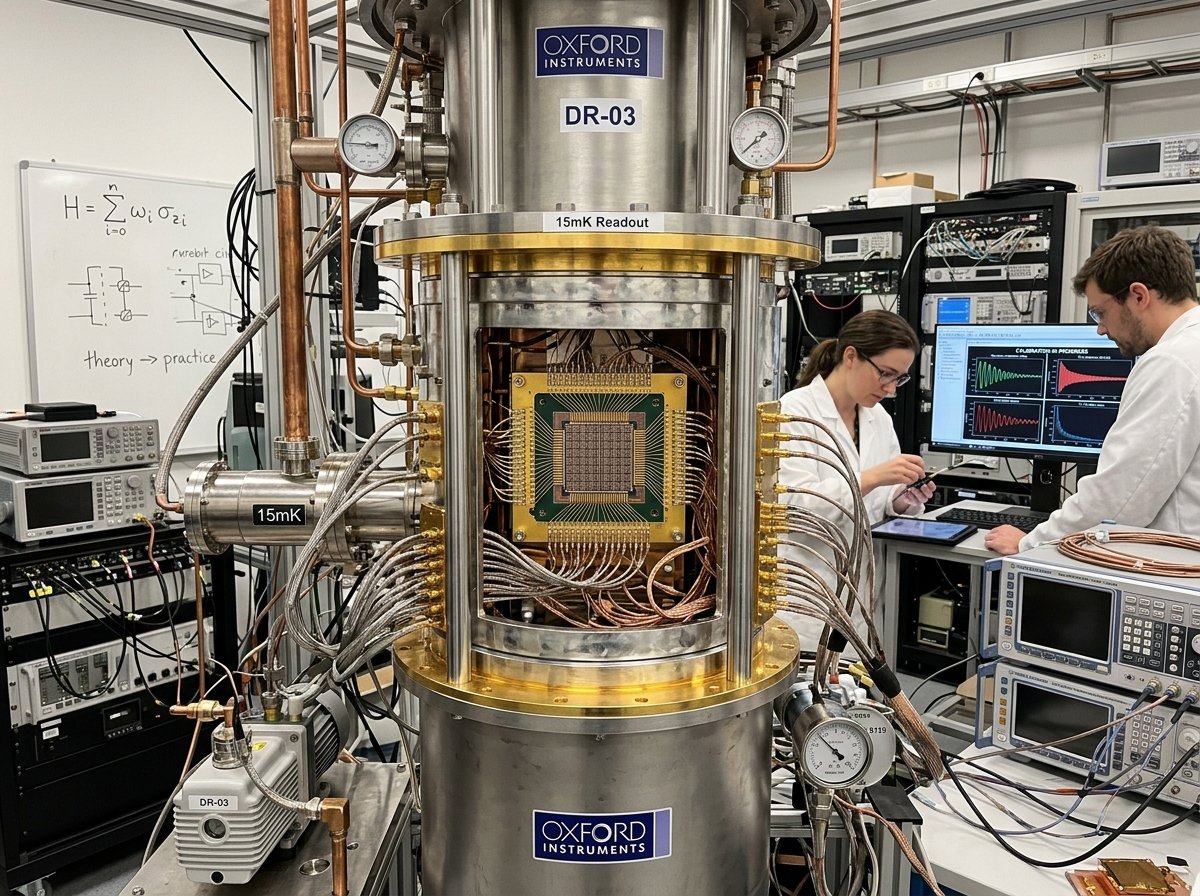
Quantum computing is leaving the lab, but not in the way most people picture it. No business is about to replace its servers. What is real is that specific hard problems in chemistry, materials, and logistics are now being run on quantum machines, and that the security side of quantum is about to become everyone’s problem.
What a qubit actually is, in plain words
A normal computer stores information in bits. Each bit is either a 1 or a 0. Everything on your laptop is built from that.
A quantum computer uses qubits. A qubit can hold a mix of both states at once until it is measured. That is the strange part, and it is genuinely strange. Nobody finds it intuitive.
Here is a way to picture the benefit. Imagine a maze with a million possible paths. A normal computer tries them one at a time, very fast. A quantum computer explores the structure of the whole maze at once and is steered toward promising routes. For most everyday tasks this is useless. For a small set of problems, it is enormous.
That last sentence is the one people skip. Quantum computers are not faster at everything. They are wildly faster at a few specific types of problem and no better, or worse, at the rest.
What changed
For years the news was always about qubit counts. More qubits, bigger machine, bigger headline.
The real shift is about errors. Qubits are fragile. A stray vibration or tiny temperature change knocks them out of their state, which ruins the calculation. Most progress lately has been in error correction, which means using groups of physical qubits together so that the machine can catch and fix its own mistakes.
That is less exciting to write about than a record qubit count, but it is what turns a lab demo into a machine that can run a job long enough to be useful.
The other change is access. You do not buy a quantum computer. You rent time on one through a cloud service, the same way you rent a server. That drops the price of trying something from millions to a normal project budget.
Where it is actually being used
Drug discovery. Simulating how a molecule behaves is a natural fit, because molecules are quantum systems. Normal computers have to approximate. Pharmaceutical companies are using quantum runs to narrow down which candidates are worth testing in a lab.
Materials science. Same idea, different goal. Battery chemistry, catalysts, and new alloys all come down to modelling how atoms interact. Anything that shortens the guess and test cycle here is worth real money.
Logistics and routing. Working out the best route for a fleet across thousands of stops is the sort of optimisation problem where quantum methods show promise. Results so far are mixed and often no better than good classical software, but the research money keeps coming.
Finance. Risk modelling and portfolio optimisation get tested constantly. Banks are among the most active experimenters, partly because they can afford to be.
Notice what is missing. No accounting, no email, no websites, no ordinary business software. That is not an oversight. Those jobs will stay on normal computers permanently.
What quantum computing still cannot do
It cannot run your existing software. The programming is completely different.
It is not reliable enough for anything where a wrong answer is dangerous. Results usually need checking on a classical machine.
It is expensive and physically demanding. Many systems need to be cooled to near absolute zero, colder than deep space.
And it is not general purpose. A quantum computer is more like a specialist instrument than a replacement computer.
Anyone selling you a quantum solution for a normal business problem is selling you something else.
The part that actually affects you
Here is where it stops being a distant science story.
Most of the encryption protecting internet traffic, banking, and stored records relies on maths problems that normal computers cannot solve in a reasonable time. A sufficiently powerful quantum computer could solve some of them.
That machine does not exist yet. The problem is a tactic called harvest now, decrypt later. Attackers copy encrypted data today and store it, betting they will be able to open it in ten years. Anything with a long secret life is at risk: medical records, legal files, government data, long term contracts, trade secrets.
Juniper Research put post quantum cryptography near the top of its emerging technology list for 2026 for exactly this reason. Standards bodies have already published replacement encryption methods, and regulated industries are being asked to plan their migration.
So the correct question for a business is not “should we buy a quantum computer.” It is “how long does our data need to stay secret, and what encryption is protecting it.”
What to do now
If you handle data with a long secret life, ask your IT team or provider two questions. Do we know what encryption we currently use and where. Do our vendors have a post quantum migration plan.
If you do not handle sensitive long lived data, you can put this down for now. Follow the security side, ignore the qubit count headlines, and revisit in a year.
Either way, do not let anyone convince you that you need to act on quantum computing power itself. You almost certainly do not.
Frequently asked questions
What is quantum computing in simple terms?
It is a type of computer that stores information in qubits, which can hold a mix of states rather than a single 1 or 0. This lets it handle a few specific kinds of problem far faster than normal computers, while being no better at ordinary tasks.
Is quantum computing being used in real businesses today?
Yes, but narrowly. Pharmaceutical and materials companies use it for molecular simulation, and banks test it for risk modelling. Most of this is still research spending rather than daily operations.
Will quantum computers replace normal computers?
No. They are specialist machines for specific problem types. Normal computers will keep doing almost everything, including running quantum jobs and checking their results.
Should my business be worried about quantum computing breaking encryption?
If you store data that must stay private for ten years or more, yes, start asking about post quantum encryption now. If not, this is something to monitor rather than act on.
How far away is a useful general quantum computer?
Estimates vary widely, and anyone giving you a confident date is guessing. Useful narrow applications exist now. A general purpose machine that changes everyday computing is not close.